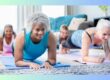
Aging in Place Requires Balance and Flexibility After 50
If you want to remain active, independent, and living in your own home as you age, your daily routine needs to include balance and flexibility exercises for women over 50.
We all want to “age in place,” but the real question is this:
What steps are we taking right now to make sure we’ll be physically able to do that?
Choices. We all make choices every day. And those choices have consequences.
If you choose to eat too many carbohydrates, you’re choosing to gain weight.
If you choose to watch TV instead of going for a walk, you’re choosing to reduce your mobility.
If you choose not to build muscle after 50, you’re choosing to become frail.
So, let’s make better choices starting today.
Last week we talked about strength and endurance. This week, let’s look at two more key ingredients for building what you need to “Age in Place:” flexibility and balance.
Why Flexibility After 50 Is Important
Arthritis and inactivity both reduce flexibility.
And flexibility is not just about being able to touch your toes. Flexibility is part of everyday life.
- You need flexibility in your hands, wrists, elbows, and shoulders to dress, brush your teeth, reach up into a cabinet, or reach out to open a door.
- You need a flexible neck to look behind you when you drive.
- You need flexible hips, knees, and ankles to walk well, climb stairs, and get up and down from a chair more easily.
So, take a moment and ask yourself:
Are you finding it harder to do those things?
Do your shoulders feel tight when you reach overhead?
Does your neck feel stiff when you turn your head?
Do your hips or knees feel restricted when you walk, squat, or rise from a chair?
If so, it’s time to pay attention.
The good news is that you can improve flexibility at any age.
How to Increase Your Flexibility
Here are a few simple suggestions:
- Find stretching workouts for women over 50 online.
- Take a Yoga class designed for women over 50 in your area.
- If your muscles are very tight, work with a physical therapist or a trainer like myself to create a flexibility program personalized for your body.
A good flexibility program should help you feel more mobile, not sore for days afterwards. It supports your joints, and improves your range of motion.
Below is a video that you can start with from the comfort of your own home.
A few minutes of stretching done regularly can make a real difference over time.
The Key to Better Balance
Now let’s talk about balance.
Simply getting out of bed or standing up from a chair requires balance.
So does showering, climbing stairs, and hiking on uneven ground.
Poor balance increases your risk for falls, and falls can be life-changing. They can land you in the hospital, or cause permanent injury.
And once fear sets in, many women start moving less.
Then they get weaker.
Then their balance gets worse.
Note: Always check with your doctor first if you are having balance issues. It’s important to rule out an inner ear problem, medication side effects, or a neurological condition. Once you’re clear, begin working safely to improve your balance.
Balance Exercises You Can Start Today
Here are two simple balance exercises you can practice at home.
- Stand tall beside a chair so you can hold on with one hand. Shift your weight into the leg closest to the chair and raise the other foot. Keep your eyes focused on something straight ahead of you, not on the floor. Breathe deeply for 30 seconds, then switch sides.
- Walk slowly along a clear hallway, placing the heel of your right foot in front of the toes of your left foot. Then place the heel of your left foot in front of the toes of your right foot. Hold the wall for support, and keep your eyes focused on something straight ahead.
Here’s another video with different suggestions and ways to help you improve your balance:
As your balance improves, you can begin holding the wall or chair with two fingers, then maybe just one.
When you’re ready to try releasing your hand, keep it close to the wall or chair so you can grab back on quickly if you begin to feel unsteady.
Balance work should feel challenging, but safe.
Practice safely and daily, and you will improve.
Balance and Flexibility Over 50 Prepares You to “Age in Place”
Balance and flexibility exercises for women over 50 are not just “nice extras.” They are part of your plan for Aging in Place.
Flexibility helps you reach, bend, turn, walk, and move with more ease.
Balance helps you stand, shower, climb stairs, walk outdoors, and feel more secure in your body.
Together, they help you keep doing the everyday activities that make independent living possible.
If you would like help improving your balance, flexibility, strength, and confidence, I would love to have you join one of my classes.
My Yoga and Pilates classes are designed for women over 50, with modifications that meet you where you are.
FAQs About Balance and Flexibility Exercises for Women Over 50
- Why are balance and flexibility so important after 50?
Balance and flexibility help you stay mobile and independent. They support everyday activities like walking, reaching, climbing stairs, getting dressed, showering, and getting up from a chair.
- Can I improve my balance after 50?
Balance can always improve with consistent practice. Start with safe exercises near a wall or chair, and always check with your doctor first if your balance problems are new or concerning.
- What does flexibility Have to do with aging in place?
Flexibility means that we can bend over to pick something up, reach into a high cabinet, look behind us when backing up the car. All things we want to continue doing until we leave the planet.
- Do I need to be flexible to take Yoga or Pilates?
No. That’s why you take the class! A good Yoga or Pilates class for women over 50 should help you improve flexibility, balance, strength, and confidence safely.
Best of Health,
Kathi